Starter care · Less waste
What can you actually do with sourdough discard?
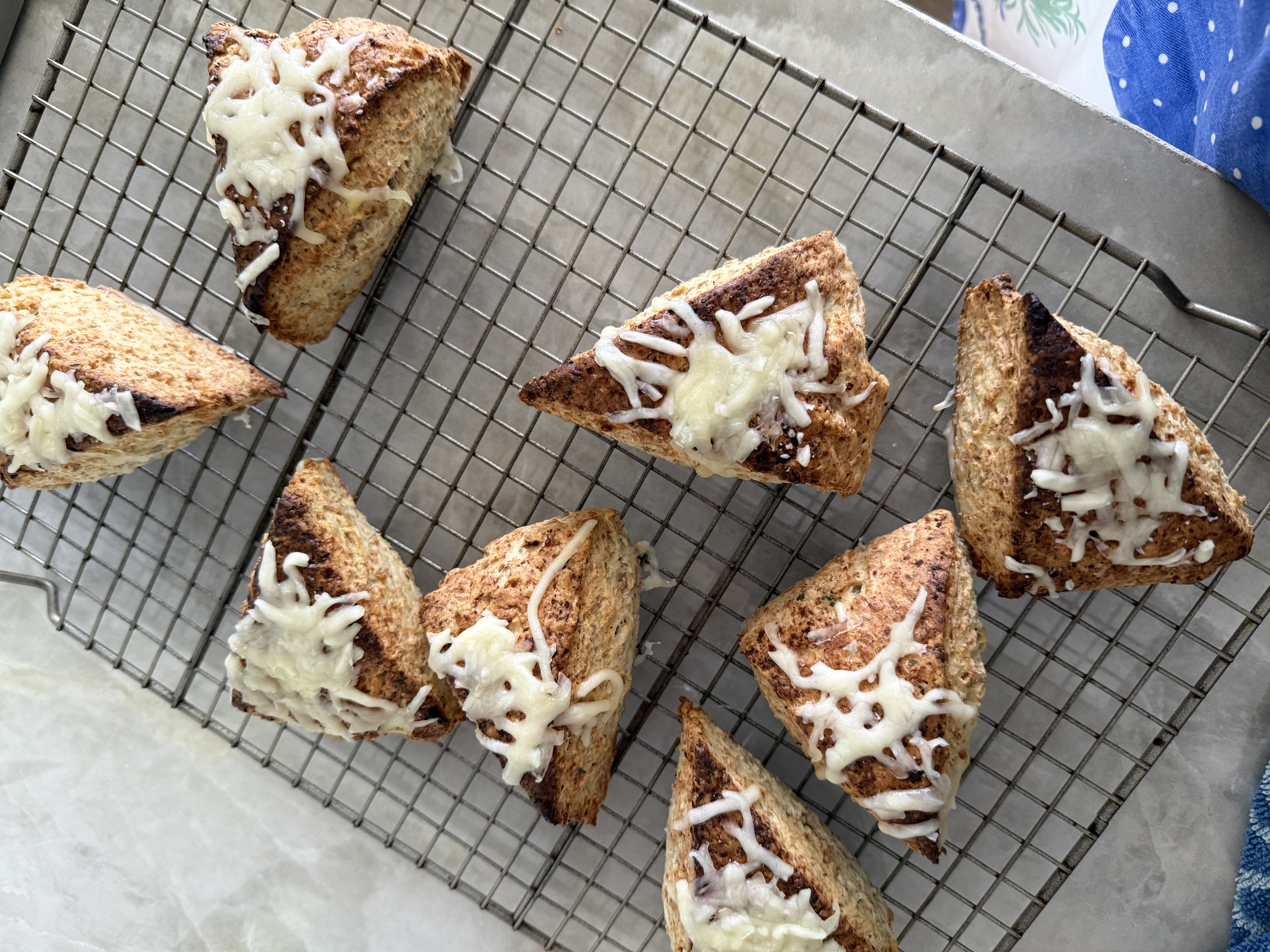
Discard sounds like something the recipe has already rejected. In reality, established starter discard is simply flour and water with acidity, flavor, and a mildly chaotic résumé. It can become crackers, pancakes, muffins, pizza dough, cake—and a very good batch of savory scones.
First: what is discard?
When you feed a starter, you keep a manageable portion and add fresh flour and water. The portion removed before that feeding is discard. Removing it prevents the jar from growing exponentially and keeps the ratio of fresh food to old starter useful for the microorganisms you are trying to maintain.
It is called discard because of its role in starter maintenance—not because it has become culinary garbage. Once the starter is mature, predictable, and free from contamination, that extra flour and water can be collected and used in another recipe.
What discard contributes to a recipe
Discard brings fermented flour, water, acidity, and flavor. What it does not reliably bring is enough leavening power to lift a quick batch of scones or pancakes on schedule. Most discard recipes use baking soda, baking powder, commercial yeast, eggs, or another source of lift.
If your starter is maintained at 100% hydration, every 100 grams of discard contains approximately 50 grams of flour and 50 grams of water. A recipe written specifically for discard already accounts for that. If you add discard to an unrelated recipe, you generally need to reduce both its flour and liquid rather than simply dropping in a cup of extra wet batter and hoping everyone gets along.
The best places to use it
Discard is happiest in recipes where a little acidity improves flavor and where exact gluten strength is not the whole assignment.
- Pancakes and waffles: easy, forgiving, and particularly good for using discard straight from the refrigerator.
- Crackers: a thin, crisp destination for discard, oil or butter, salt, and whatever seasonings are currently campaigning for attention.
- Scones, biscuits, and muffins: discard adds tang and tenderness while chemical leaveners provide predictable lift.
- Cakes, brownies, and cookies: excellent when the fermented flavor complements chocolate, spice, fruit, or brown sugar.
- Pizza, focaccia, and flatbreads: discard adds flavor, but commercial yeast or active starter may still be needed if you want a dependable rise.
- Batters and coatings: a practical savory use when you want crispness and acidity without creating another sweet breakfast.
How to keep a discard jar
Use a clean, covered container with enough room for the contents. Add only discard from a healthy, established starter and refrigerate it promptly. Dating the jar is more useful than trusting yourself to remember which Tuesday began this particular archaeological layer.
A gray liquid layer and a sharper fermented smell can develop as the discard sits. Those signs usually mean the mixture is hungry and acidic, not automatically unsafe. Mold, fuzzy growth, pink or orange streaks, or a putrid smell are different: throw out the entire jar. When in doubt, discard the discard. Flour is cheaper than food poisoning and considerably less dramatic.
For the best flavor, make the jar part of your regular baking rhythm rather than maintaining a permanent museum exhibit. Use older discard in strongly flavored baked goods and fresher discard when you want a gentler tang.
Temperature matters
Cold discard is convenient for quick breads and especially helpful in scones or biscuits, where keeping the butter cool supports flaky layers. If a batter needs to ferment before cooking, the recipe may ask you to let the discard warm or rest with the other ingredients. Follow the method rather than assuming every discard recipe wants the same temperature or schedule.
Discard can occasionally raise a dough if it still contains plenty of active yeast and is given enough time—but that is a bonus, not a dependable plan. If the recipe needs reliable fermentation, use ripe active starter or add commercial yeast as directed.
And no, it should not go down the drain
Flour paste thickens, dries, and clings. Scrape excess starter into the trash or compost, wipe the jar before washing, and avoid sending a jarful into plumbing—especially when your home uses a septic system. A small diluted residue left after scraping is ordinary dishwashing; deliberately pouring thick discard away is not.
The easiest way to reduce waste is still to maintain a smaller starter. A tiny starter can be built up before baking and produces far less excess than a large jar fed repeatedly for no particular loaf.
Further reading
King Arthur Baking explains how to store and use established sourdough discard, offers ideas for discard-friendly recipes, and demonstrates how maintaining a smaller starter reduces waste. For homes with septic systems, the U.S. EPA recommends limiting the food waste sent into the system.